Wednesday, February 7, 2018

The problem with loyalty
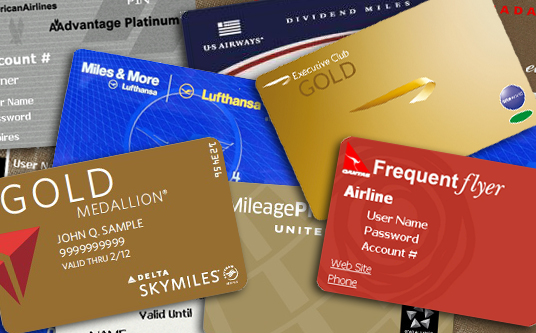
Imge from AirlineRatings.com

The problem with most loyalty programs is that they equate frequency with loyalty.
These are two very different things in customers' heads - and need treating and responding to very differently.
This becomes abundantly apparent if you take the time and trouble to contextualise your relationship with customers - but is easily missed if you charge head long towards one-size fits all operations in which the customer is simply the cash output device.
Let me give you an example. Imagine I have a strong affinity with an airline brand. Imagine that every time I fly long haul I choose them over all rivals. I'll even happily pay more for brand satisfaction I get from the reassurance of my choice.
But I'm not a frequent flyer.
In loyalty scheme terms I struggle to get off base.
But in actual loyalty - I'm the one who will be thrilled with the upgrade, I'm the one who will advocate to my peers how great the brand is and why they should follow my lead.
The frequent flyer has a sense of entitlement. Typically she is flying at least every week on business. If 30 per cent of those flights are with 'my; brand, the airline will see her as more deserving of special treatment - even though she doesn't see the treatment as in any way special.
She is in no way loyal - playing the varying airline loyalty status cards to get her the best deals. She cares much less which airline, more which rewards she can muster.
In summary; the frequent flyer doesn't care about your brand, expects you to go above and beyond for her (and will share negatively with her peers when you don't) and is not making you her default choice when flying. Yet these are your focus?
The loyal consumer chooses you by default every time they get to choose. They advocate for you. Going the extra mile for them creates massive value for them thatt they will talk about.
So isn't it time Loyaty grew up a bit and started recognising where rewards really create value. Lifetime Value has to factor for advocacy, for a real relatonship with the brand - one which runs far deeper than promiscuous frequency.

Labels: , , , ,

Tuesday, July 22, 2014

The strategic role of content in proving brand promise

Click the image to see at full size
Social Media has confused many marketers for many years. Mostly because it isn’t a media. It’s an exercise in relationship building.

It tends to be thought of as a channel of amplification – “hey social guys, here’s my great idea/piece of content (ah hem, advert) go do magic to make it famous”.

It is, of course, a channel of advocacy.

In many ways social has more in common with the promise proving role of CRM and loyalty than it does with promise making role of brand strategy - not least because social is and always has been the single most effective way to have an open door to your customers at scale.

Whether you open that door to gather data (information about the needs and wants of customers and potential customers) or to build relationships (with customers, and potential customers) what is clear is that you don’t throw that door open and try shouting through a megaphone through it.

So, to help clarify the role and effectiveness of social content – and that of other content, I’ve developed this simple model (see diagram above).

You’ll note that I’ve annotated each of the bands with ‘Awareness, Consideration, Conversion’. This is something of a simplification (evaluation is, for example also taking place in social – and there are cross-overs, social can also deliver awareness and consideration, and it’s not unheard of for ATL (above the line) to trigger an immediate sale) but they do, I believe, focus on what each of Brand/Content/Social strategy is best at delivering – and therefore a guide to where the focus of each should be.

Social is a conversion channel because it is the truth medium. It is where we report the truth of  experiences – and it is where we turn (to each other, to our friends) to discover the truth behind the promises. This is where the proof of the promise a brand strategy makes and a content strategy brings to life is either made or has its bubble burst in spectacular fashion.

Google’s ZMOT (Zero Moment of Truth) - the point at which the purchase decision is made (a conversion is delivered) is therefore the point at which we discover a friend’s positive report of the truth of the brand’s promise. So social’s focus is on building advocacy in small audiences (right down to one to one) through rich relationships in modes of content where the user has the control.

Content that has value in this is that which inspires, discovers, aggregates and/or amplifies reports of the proof of the promise. Why? Because that’s what drives conversion. The more easily a potential customer can discover a positive user-generated report of the brand’s promise being true – at the right time in their own decision making process, the more likely a customer is to buy.

A test for this comes when the shiny content guys come to call. “Hey social guys, here’s my shiny thing, make it famous for me!” To which the answer should be:

Sure. So long as you can give me positive answers to the following:
        Will it build advocacy?        Will it build trust/relationships?        Is it in the user’s control?

If so feel free to ‘amplify’ through the relationships social has built. If not, stick to the channels most appropriate for building awareness…


Labels: , , , , ,