Wednesday, April 24, 2013

Concepts Are King

The phrase 'Content is King' has a long history. Its origination is usually ascribed to one Bill Gates from a 1996 article. Smart dude.

But I suspect it goes back rather longer. Those of us with a traditional media background always knew it was the content people bought our stuff for, for example.

Then there was the build - that not Content, but Conversation is King. Cory Doctorow memorably put it that "Conversation is King... Content is just something to talk about."

Content is pointless without conversation. Conversation needs 'something to talk about'.
Neither is king. It's the interaction of people and ideas that drives us to action. The web has lowered the barrier for millions to interact with ideas.

And no one is describing what they are interacting with as 'content'. In fact 'content' has some rather unhelpful connotations in the context of what the web is best at enabling - ie adhoc self-forming groups of purpose.

Content implies constraint; An idea boxed and kept within - a thing inside with limitations.
This isn't how people behave with ideas. We take, shape, add, delete, remodel - hack ideas in our every interaction. And the web is a splendid evolutionary environment for them.

So I'm going to suggest Concepts Are King is a better 'catch-all' for what is really important in connecting folk. I can take your boxed up piece of content and share it, of course. That's old-style viral. Pass it on unmolestered. Don't expect evolution.

Or I can connect with and play with a concept. We can.

And in so doing we add value - not mere distribution.

Image attribution: By Enoch Lau (Own work (photo)) [GFDL (http://www.gnu.org/copyleft/fdl.html), CC-BY-SA-3.0 (http://creativecommons.org/licenses/by-sa/3.0/) or CC-BY-SA-2.5-2.0-1.0 (http://creativecommons.org/licenses/by-sa/2.5-2.0-1.0)], via Wikimedia Commons

Labels: , , , , , ,

Monday, October 27, 2008

Happy Halloween: Don't fear the adaptor

Almost a year ago I wrote a post that called on those who would 'do viral' to remember who actually 'does' viral: The humans doing the interacting with one another.

And to that end attempts at 'viral' work which enables co-creation gives you both engagement and relevance.

One example I remember well from a previous life was an excellent and funny video - expensively made with high production values too. It was on topic. The seeding strategy was sound.

But it was essentially broadcast, broadcast which USED the user as the distribution channel.
So the message couldn't be adapted by the receiver. There was no room for their input. No adaption = low adoption. And if I don't adopt, I'm not going to pass it on; as simply illustrated as I can, here.

The quality was high. But the relevance was low. And relevance, as I so often say, beats quality every single time.

Allowing people to put a little of themselves into 'your' viral makes it 'their' viral.

And as Alan Moore - and by osmosis I, am so fond of saying: "That which we create, we embrace."
It allows us to work with the user rather than targeting them, based on the understanding that the User Is The Destination Now.

It makes it their message, not yours.

So I was delighted to walk into my new job this morning to be met with this new piece of work from Brando-Digital (yep, that's where I'm working now).
(By the way, we're so new the company site is nothing but a holding page right now. If you'd like to know more about us, drop me an email at david AT brando-world.com )
Despite the he-would-say-that-wouldn't-he inevitable in this; I think it's pretty cool. It allows the adaption of the message which will encourage that adoption.

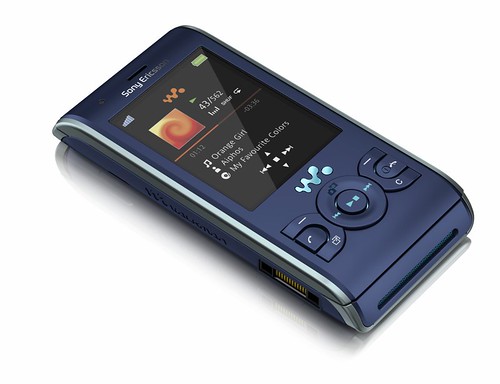
It's promoting a new phone, the Sony-Ericsson W595 - so the youtube element is not only relevant (you can upload direct to youtube from the W595) it's also a helpful viral aside.

Technically, some may be interested to know the creation of this effort has involved mashing-up apisfrom youtube, googlemaps AND facebook.

And importantly, it uses not only the silo'd social networks (in this case facebook) but also email - the most ubiquitous of all the social connectors.

Yeah, yeah, yeah but it's also a bit of fun people can have together at Halloween. We've given people, as Mark Earls would say, something they can do together - we've made the human interaction element the important element.

Have fun with it. Pass it on if you think its cool and think someone else will do to. Here's mine, below.
BTW I'm not 43 - yet! But I am odd.


Labels: , , , , , , , ,

Monday, July 14, 2008

Make things spread fast: With a smile (or a scream)

A smile is among the most rapidly transmitted things I know. Laugh and the world laughs with you... smile and people smile back (they can't help themselves, as Herdmeister would aver).
We're monkey-see-monkey-do critters. Homo Mimicus. Things spread because we copy the monkey next to us. So spread with a smile?
One example HERD brings us of human-to-human transmission is the roadside floral tributes to road crash victims we now see so many of. I spotted a varient in New York last month: The bicycle the victim died on chained to a post on Broadway (I took a picture, right).
Now I read that the idea is being copied by fellow apes across the UK. They have been dubbed, Ghost Bikes.
This kind of spreading is very easy to spot (it's hard to miss a bike chained to a lamppost, hence the reporting in the mainstream press).
The idea is being easily and relatively rapidly copied. It is easy to understand the idea, and easy to create our own versions of it. (nb: The moment the Government makes a standard white replica bike to distribute to local authorities to attach to lampposts at accident black spots, the idea will be finished).
But perhaps there is already a brake on the pace at which ghost bikes can spread.

There's nothing funny about them. Nothing at all.

The things that get rapidly shared are not only those which can be easily copied and adapted (co-created) to suit the community we each interact with, they are also funny.

Smiling spreads fast. Laughter too. It's why the watching-tv-at-home belly laugh is a rare thing but the laughs-out-loud are two-a-penny when you're in a comedy club audience.

So, I'll stick with the idea that we pass on things that we think those we are passing on to will think is cool. Stuff spreads this way.

Bit if I think it's cool and funny stuff spreads way faster.

Perhaps it is simply because there are now three possible groups you will share with:
1. those you define as likely to think what you pass on is cool,
2. those you define as likely to think what you pass on is funny and finally,
3. those you define as likely to find it both cool and funny.

I'm guessing group three are the most likely to pass it on?

There's a darker flip: Fear and panic spreads rapidly through groups, too...

Ghost Bikes?

Labels: , , , ,