Tuesday, July 17, 2018

The Digital Customer exposes the need for value in all interactions


We already have digital versions of ourselves populating our increasingly digital world: Your Linkedin, Facebook and Twitter profiles, your Amazon and Google footprints are all examples.
For the most part they are not yet autonomous. But it cannot be long before the 'MeBot' - an autonomous and intelligent you - becomes a ubiquitous part of our daily interaction with people, things and data.
All of which strongly suggests that brands and organisations must start developing strategies that place the digital customer at their heart.
Let me be clear, that digital version of you will always be informed by and learning from the real you. But increasingly it will be the digital rather than analogue version of you who will be making the transactions (tilting, as these thing are, to online more heavily by the day).
And if Digital You has got the spends - Digital You is going to be the target.
So what does advertising/targeting/relationship-building/comms/PR/you-name-it look like when it is aimed at our MeBot?
Well - I suspect MeBot's will rapidly learn which lies to ignore, which content sources to trust, which deals are for-real. They may even be less swayed by the Herd mentality humans find it so hard to resist (think of the impact on the Stock Markets...).
This is likely to starkly expose some of the realities and truths of relationships of trust - such as...

  1. Customers are not inhabitants of your omnichannels waiting to be managed from one to the next. They live in a 4D world with limitless touchpoints. The analogue digital combination will evidence that by the truck-load. Map that!
  2. Customers are not waiting to be engaged, made your friend, or have anything else 'done' to them. They need a reason to interact with you... which leads us to point 3.
  3. Customers are not loyal. Forget loyalty - focus on proof of value. Unless you are offering a good enough value proposition your wheels will just keep on spinning.

Labels: , , , , , , , , , , , , , ,

Thursday, November 21, 2013

Brands can't live on a promise

Performance is essential in social media. Nothing moves in a peer-to-peer environment unless a behaviour is impacted.

No matter what you may say your brand is - through deeply-thought positioning, emotionally charged TV advertising or carefully crafted copy, what your brand actually is, is what other people say it is.

And what other people say it is, is what people experience it is: How it performs and how they say it performs.

Image via cuddlycomments.com
That's the message you'll find in Chapter 10 - Trust, in my forthcoming book (Palgrave-Macmillan, January 2014) -The 10 Principles of Open Business.

It's the same position arrived at by Google and Brian Solis in their work on The Zero Moment of Truth (ZMOT) and - more recently - Brian's Ultimate Moment of Truth (UMOT).

ZMOT asserts we start our path to purchase in our perception of the expression of experience of others in our social circle. We hear good things. We hear bad things. We act accordingly.

Our own research (at The Social Partners) supports the idea that social media (which can almost wholly be defined as the expression of shared experience by our peers and people like us, as viewed from a variety of individual perspectives ) is THE place we turn to for evidence of performance: Advertising makes the promise, social delivers the truth.

Brian's UMOT is a neat expression of a concept I have been applying to my own work in social media strategy:  Building trust through performance at the level of the one-to-one relationship.

Since the brand is what people say it is, having experienced it, how do we encourage people to express their joy? What we do know is that people don't express their meh! So-so performance, mediocrity, blandness - of these we have nothing to report to our peers through social. The technical barrier remains that little bit too high. We don't tweet 'coffee in Starbucks was, you know, ok '. We do tweet 'awesome service in Starbucks today' or 'Starbucks was super sucky this morning'.

We go to the effort to report the out-of-the-ordinary, not (yet) the ordinary.

Brian's response is to encourage expression (reporting the out-of-the-ordinary) we must engage them - by which he means do something to make them love you (and that is most assuredly NOT clicking the Like button or browsing over your centre-out messaging content).

My own work in relationship marketing suggests similar (indeed the whole concept of Open Business shared in The 10 Principles of Open Business is about taking customer engagement to a whole new level by making partners of customers in everything you do).

Engagement, Brian argues, is about emotion.

Again, agreed. And here's the thing to guard against: Social Media is not good at broadcasting emotion - just as it can't broadcast trust.
Emotion resides in the individual and in their interaction with their peers.  Winding up a John Lewis Christmas TV ad and setting it off among your targets won't do the job.

You have to provide the out-of-the-ordinary. You have to build trust in your performance, You have to build the relationships, one person at a time.

This may sound expensive but we are already finding methodologies to track the effectiveness of this over-
delivery, of how far and for how long the emotional impact of feeling a little bit of love resonates.
My belief - one for which I am busy gathering evidence (and there are many anecdotal examples) is that being 'insanely great', as Steve Jobs put it, pays massive dividends.

At the end of the day since the aggregate output of what other people say is what your brand is, then this is where you should be focusing your  brand budget.

All the rest is just a promise.


Labels: , , , , , , , , , , , , , , , ,

Monday, October 27, 2008

Happy Halloween: Don't fear the adaptor

Almost a year ago I wrote a post that called on those who would 'do viral' to remember who actually 'does' viral: The humans doing the interacting with one another.

And to that end attempts at 'viral' work which enables co-creation gives you both engagement and relevance.

One example I remember well from a previous life was an excellent and funny video - expensively made with high production values too. It was on topic. The seeding strategy was sound.

But it was essentially broadcast, broadcast which USED the user as the distribution channel.
So the message couldn't be adapted by the receiver. There was no room for their input. No adaption = low adoption. And if I don't adopt, I'm not going to pass it on; as simply illustrated as I can, here.

The quality was high. But the relevance was low. And relevance, as I so often say, beats quality every single time.

Allowing people to put a little of themselves into 'your' viral makes it 'their' viral.

And as Alan Moore - and by osmosis I, am so fond of saying: "That which we create, we embrace."
It allows us to work with the user rather than targeting them, based on the understanding that the User Is The Destination Now.

It makes it their message, not yours.

So I was delighted to walk into my new job this morning to be met with this new piece of work from Brando-Digital (yep, that's where I'm working now).
(By the way, we're so new the company site is nothing but a holding page right now. If you'd like to know more about us, drop me an email at david AT brando-world.com )
Despite the he-would-say-that-wouldn't-he inevitable in this; I think it's pretty cool. It allows the adaption of the message which will encourage that adoption.

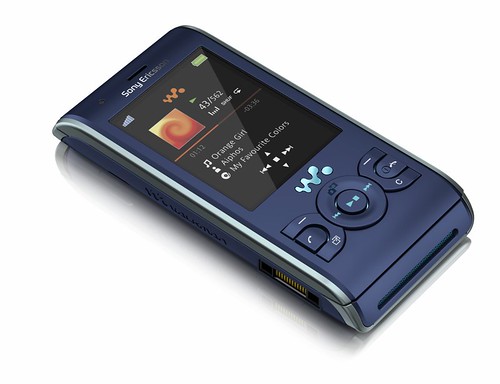
It's promoting a new phone, the Sony-Ericsson W595 - so the youtube element is not only relevant (you can upload direct to youtube from the W595) it's also a helpful viral aside.

Technically, some may be interested to know the creation of this effort has involved mashing-up apisfrom youtube, googlemaps AND facebook.

And importantly, it uses not only the silo'd social networks (in this case facebook) but also email - the most ubiquitous of all the social connectors.

Yeah, yeah, yeah but it's also a bit of fun people can have together at Halloween. We've given people, as Mark Earls would say, something they can do together - we've made the human interaction element the important element.

Have fun with it. Pass it on if you think its cool and think someone else will do to. Here's mine, below.
BTW I'm not 43 - yet! But I am odd.


Labels: , , , , , , , ,

Wednesday, September 17, 2008

Measures of engagement - convincing the disconnected

Ever been asked for the ROI on social media by someone who actually uses it?

Just a thought, but I'm making a wild guess that those that use it understand its value in spades - and don't require the numbers. It's those that don't, who fret over each micro response - failing to see the bigger picture.

So your best strategy for getting someone to buy social media is to get them to buy-in to social media with a little DIY. I often recommend that everyone should blog, join a social network and build their own widget, for precisely that reason. Don't just witness the network. Be part of it. (image by burnblue via flickr)

Traditional media people and investors, for example, are happy to spend cash on TV ads, or interruptive online ads, or print ads. Because they get them. They understand that they are to be broadcast and consumed by audiences. And they are part of the audiences that do the consuming.

The other stuff - the clever, engaging (and we'll come back to that word in a bit) stuff is co-created within communities. And those that you want to part with their cash are not part of those communities.

Is it any surprise that Fred Wilson's outfit (Union Square Ventures) invests in socially engaging projects from twitter to disqus, del.icio.us, etsy, feedburner, tumblr and beyond. He lives in the social digital realm. He is therefore at an advantaged position to see the value. And Fred is famous for his hit rate. Maybe others could learn?

If you can't actually convince your would-be meal-ticket that they should blog, widgetise and generally get themselves connected before you pitch them, you face a tough gig. You'll have to play by their rules.

Luckily, we're finding a way to meet them halfway.

I tweeted yesterday: "Consumers value brands. Engaged people are valuable to brands".

ROI can't come down to increased traffic. Traffic is just eyeballs - it's just the page impression number. ROI has to get closer to and be more comfortable with the smaller, but more important numbers, of engagement.

For me, engagement with a community means you contribute something to it. Youtube's audience is valuable in a page impresssion sense. Youtube's contributors (particularly those forming groups, commenting and uploading video) have a much higher per capita value for youtube. (Total communities are ones in which to take part you must create part).

Enagagement should be measured by actions. All the rest is passive consumption.

Both have value of course. But what is the relative value? We feel engagement has higher value. Fred Wilson feels it well enough.

But where are the spreadsheets to convince the disconnected? SociallyMinded.co.uk colleague Matthew Brazil is working on exactly this with Radion6. I'm hoping to help him along the journey as is Dan and the organisers of Measurement Camp are striving for similar.

Matt is carefully testing the impact of using social media on actual business done for his consultancy.

That's exactly the kind of clincher the disconnected needs. And filling this hole may be just the blue touch paper required for more companies to get and use social media.

And as they do, they will become better - more fit for the networked world. More human. And that will be great for all of us - and for them..

So, if you have thoughts, any methodologies... post away!

And to try to get this rolling along and even more brains set workign on it, let's try it as a meme: Measures of Engagement.

John Carson has added his take.

I'll tag a first five to join in please: Alan, Dan, Joseph, Matt and Will

Labels: , , , , , , , , ,