Wednesday, November 28, 2018

The efficiency obsession - price isn't everything

Ross Hitchenor has written a great summary of a great session on the damaging impact of our obsession with efficiency.

Read it. I do think Professor Roger Martin's call for a switch away from efficiency towards resilience echoes Nicholas Taleb Nassim's valuable concept of antifragility.

And I'm glad that someone from the floor raised the ghost of Marx. Classical Marxist theory maintains that fewer people getting richer faster is a necessary consequence of unconstrained markets. Markets operating with perfect efficiency will always centralise capital. The market's ability to price-in cost should make it the ultimate resource allocator.

But it can only work if the price of each transaction reveals the total cost (including environmental and social impact). 

This requires rapid and insightful calculation and transparency on a global scale - as I wrote in a Linkedin article - Can We Code The Economy To Cut The High Price of Low Cost

Finally we may know the true cost of everything - and even its value.

Labels: , , , ,

Tuesday, July 17, 2018

The Digital Customer exposes the need for value in all interactions


We already have digital versions of ourselves populating our increasingly digital world: Your Linkedin, Facebook and Twitter profiles, your Amazon and Google footprints are all examples.
For the most part they are not yet autonomous. But it cannot be long before the 'MeBot' - an autonomous and intelligent you - becomes a ubiquitous part of our daily interaction with people, things and data.
All of which strongly suggests that brands and organisations must start developing strategies that place the digital customer at their heart.
Let me be clear, that digital version of you will always be informed by and learning from the real you. But increasingly it will be the digital rather than analogue version of you who will be making the transactions (tilting, as these thing are, to online more heavily by the day).
And if Digital You has got the spends - Digital You is going to be the target.
So what does advertising/targeting/relationship-building/comms/PR/you-name-it look like when it is aimed at our MeBot?
Well - I suspect MeBot's will rapidly learn which lies to ignore, which content sources to trust, which deals are for-real. They may even be less swayed by the Herd mentality humans find it so hard to resist (think of the impact on the Stock Markets...).
This is likely to starkly expose some of the realities and truths of relationships of trust - such as...

  1. Customers are not inhabitants of your omnichannels waiting to be managed from one to the next. They live in a 4D world with limitless touchpoints. The analogue digital combination will evidence that by the truck-load. Map that!
  2. Customers are not waiting to be engaged, made your friend, or have anything else 'done' to them. They need a reason to interact with you... which leads us to point 3.
  3. Customers are not loyal. Forget loyalty - focus on proof of value. Unless you are offering a good enough value proposition your wheels will just keep on spinning.

Labels: , , , , , , , , , , , , , ,

Thursday, June 21, 2018

The road to frictionless has hardly begun

Image via : https://amckinnis.com/3-ways-to-create-frictionless-transactions/
A fascinating evening at Imperial College last night. An opportunity to hear from Google and Amazon  and others on Voice.

Voice is becoming increasingly important - with 85 per cent of brands now actively working on their voice strategies (according to Vaice - a voice tech agency offering pro bono help to brands and agencies to engage in voice).

We heard about encouraging efforts from the likes of Snips (who have a blockchain-supported edge-computing solution to the data-grab dilemma many businesses, orgs and people may fear of the increasingly dominant platforms (such as Google, Amazon, Apple, Microsoft, Facebook) and a personal favourite, Voiceitt, which is out to make voice accessible to those whose speech may be challenged by stroke, cerebral palsy and other debilitating conditions (including age).

Amazon shared the model it uses to make decisions about Alexa Skills to build. Unsurprisingly it starts with customer value...

Customer Value / Complexity x Frequency Potential x Frequency Maximisers

To be honest, that's pretty much the formula for success applied since widgets became apps, on web or mobile. I could argue it's a pretty solid formula for success in pretty much anything.

But it has been for a long time.

And that's the bit I think the excitement about Voice is missing currently. There was a lot of focus on the value of content and the continued broadcasting of it. There was talk about designing for personas, but none of this addresses the shift we should be looking for in business models.

When the web arrived, this was also the first reaction; how can we make money with this novelty?

It's real impact is how it shifts the way we can organise, cut out traditional supply chains etc. That wasn't identified immediately for the most part.
Then apps - what new capabilities could we play with?

We will also see a repeat of BYOD - my home is full of voice devices. My office (apart from our Collab) isn't. A generation of kids is growing up right now using voice for search, to learn, to discover music, to play games, to do the stuff they want to do with technology. Alexa for Business is already live in the US.

The big stuff, the new business models, the real impacts on how we behave (and since we are social beings, build relationships and organise), these come when we start considering what it means to have ubiquity with the new technology:

  • How will we behave when voice is everywhere in everything (and I will package personal recognition without  the need for a screen with this)? 
  • How quickly can the AI behind voice learn enough about our emotional state to make use of it? The reasons behind our behaviour are somewhat more complex than current marketing typically grasps (See Behave for a crash course).
  • Do we need new rules to cope with the fact that voice literally speaks to our most instinctual selves (bypassing much of the frontal cortex brain activity where are our logic and judgment are most developed).

Voice strategies must go beyond a tone of voice for a brand. They must look to a future in which the majority of information exchanges are done out loud, where a few clicks is friction too far, where single sign-in is in the dustbin of history and customer intimacy is of the highest fidelity and at ubiquitous scale.

Here is a world that, from that learned intimacy, prediction must follow.

The immediate battle field is on two fronts:  First to intimacy and first to prediction built on it. The road to frictionless has hardly begun.

Labels: , , ,

Thursday, May 24, 2018

Predicting how long your job will last

If you want to predict the future, look at what has stood the test of time.

When we talk about the future of work - naturally there are going to be new roles. There may be less or different tasks, the latter more likely.

But what you can bank on is that the roles that were here 100 years ago are far more likely to be here in another 100 years than those roles that have been with us for just a few short years.

That's not to say none of the new ones will stand the test of time, but a far higher percentage of the old ones will.

The longer anything lasts - the longer it is likely to continue to last. This is one of the lessons we can draw from Antifragility and other work by Nassim Nicholas Taleb. He would say it is a lesson we can learn from the wisdom of our grandparents.

Will a teacher's job exist in 100 years time? 90% yes. Will a social media strategists? 90% no.

We are often dazzled by the new and make projections into the future on very shallow data. This fails. As AI is proving all over again.

To create value with AI the proposition needs to be reframed in terms of prediction. But unless the correct weighting of what has come before is built into the programming, researchers find they hit the problem they call 'catastrophic forgetting'. The solution is to build in virtual memories (eg Deep Mind's Differential Neural Computer).

For AI to succeed it has to factor for what you and I instinctively know - the longer something has lasted, the longer it will succeed.

Labels: , , , ,

Thursday, March 29, 2018

What if Facebook is doing us the biggest favour of all?

What if Facebook's scooping up of our personal data is doing us a huge favour?
How can that be? Let's imagine, and think, really big for a moment.

Humans as corporeal beings may be facing an extinction event. We are destroying our eco-system at an alarming rate, making large tracts of land uninhabitable. Sperm count has fallen in developed countries by 50% in four decades. If the rates of decline continue we'll be hitting 'The Handmaid's Tale' scenarios before we run out of Earth to live on.

There are those that argue (Life3.0) that far from dieing out, we may be about to evolve. That evolution would see us abandon our bodies and attain consciousness as digital beings.

To do so would free us from the challenges of keeping our bodies in a decent state - alive for example, and enable us to explore the universe, giving meaning to the vast tracts of it that currently have none (because there is no consciousness out there to experience it).

With me so far? Ok. So how does that mean Facebook is doing us a favour?

AI needs a lot of data to start learning and doing things humans do. It will need even more to recreate conscious versions of ourselves to live in infinity as zeros and ones.

What if this is Facebook, Google, Baidu, Yandex, Amazon's real mission - even if they don't realise it themselves? They are gathering and storing the data - to enable our evolution-as-upload as part of (rather than subject to) The Singularity.

Someone has to do it. If Facebook wants to make use of my data in the meantime to personalise an ad or two - I think that's a very reasonable exchange.

Happy Ishter!

Labels: , , ,

Tuesday, February 27, 2018

Engines of enhanced customer experience

We have the technology to provide one-to-one intimacy in marketing with engines of enhanced, in context, real-time and predictive customer experiences.
Neuroscience, behavioral economics and psychology combine to make the automated promise of AI one which delivers the truly effective next best offer or action.
The world of one-to-one CRM is here, with the capability to predict your needs and respond to them as they arise. We can apply Robotic Process Automation to deliver this efficiently and at scale.
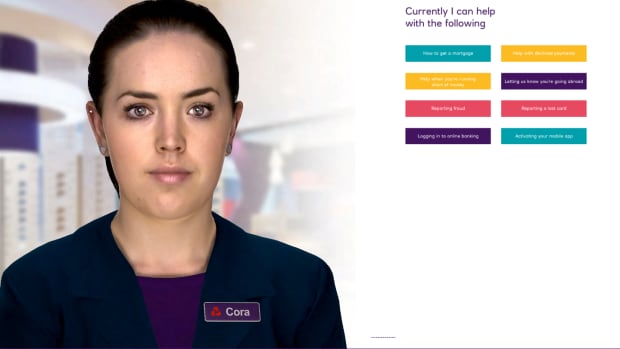
And yet - when NatWest brings us Cora - an AI-driven, human-faced service bot, it creates an experience which could cut down the time required by a teller to serve you. But the upside for the customer is strangely limited. Despite our being able to speak with this voice-recognising screen-based bot, it responds by telling us to log in and complete a form.
It's an early test. I suspect it won't get deployed unless and until the team apply a little human-centred thought. If it recognises voice it could recognise YOUR voice - removing the need for log-in. If it recognises what you are asking, it could understand what of the records it has on you that it needs to access to complete the form for 'I've lost my credit card' or similar.
The same thinking can be applied to the very long queue in my local branch of LLoyds on Saturday morning.
Today's queue at the bank is made up of people who either do not or will not use internet services, and those who need some kind of physical exchange. The other folk in looking for mortgages etc have nice places to sit and wait for their appointments.
There was one teller on duty. Another employee fluttered around the queue asking what we were trying to achieve today, leading some folk off to machines if they found that was relevant - trying to lever some behaviour change into them.
My need was for physical exchange - converting unspent holiday currency into GBP - so I was left in the queue.
The experience illustrated much that is wrong with automating customer experience.
At the counter, I handed over my bank account card and my currency. The teller then had to fill in a form by hand to confirm she was handing over the currency exchanged and I was accepting the rate etc. She got to the point when she asked for a contact number and I was half way through responding when I said - "hang on a minute. You've got my bank account card, surely from that you can tell my name, address, contact number, bank account numbers etc. Why are we filling all that in again now?"
No doubt the poor teller's hand-written form will be typed in to create a digital record at some point further down the line.
If a written record is essential, surely it could be auto-created - saving time for both customer and teller - and cutting that queue. And a little bit of intelligence would identify that I regularly return from a trip with excess currency. Why doesn't my bank - which knows when I am back from my spending patterns - send me an invite with a rate for exchange (which I could compare with others). I could confirm an appointment to make the swift handover with form pre-completed and ready to roll.
Processes like these are easy to set-up in self-learning AI-powered workflow tools. With some platforms the set up work doesn't even require external expertise, the users themselves simply do their job and the AI learns which bits can be automated and/or optimised.
But for all this, unless the creation of value for the end-using human is the focus, each application of our engines of enhanced customer experience will only improve our efficiency at doing the wrong thing.

Labels: , ,

Friday, February 16, 2018

Should we code humanity into evolution?

Via:  https://news.vanderbilt.edu/vanderbiltmagazine/robot-evolution/
AI - if you take the leap to superintelligence and the singularity - may be our next and massively accelerating evolution. In the decades to come that evolution is likely to decide how many of the 'flaws' of humanity have a place in our/the future.

If we do have any control over it, how can we hard code our nobler selves into a new version Three Laws of Robotics? The evolutionary advantageous urge to co-operate, our empathy (leading to altruism, care for others, love), the value we place on trust (and our innate ability to sense deception). 

These are not questions of the far future. If we believe there is something worth protecting about humanity now is the time to consider it.

No-one and nothing survives the process of evolution indefinitely. We are in the unique position of both creating our replacement and having an opportunity to set its behaviours for the future.

The challenge when trying to set rules for behaviour though is the huge cultural weight shaping our view of wrong and right. That view varies from culture to culture and through time.

Do we have the right we have to set the rules for how our replacements must behave?

Or should we leave it to evolutionary forces among competing super-intelligences?

We have that choice.

Labels: , , ,

Tuesday, February 6, 2018

Imagination beyond experience - the leap to Super-Human

Image from the movie Superman
Humanising AI is a worthy and common dream. And it is where and how we should focus to create value in the near term. But a greater challenge looms.

While we always seem to want to make AI 'think like a human', we know that when it doesn't, it can outperform us (in narrow fields, where ambiguity is constrained, at least) for example in the games of Chess and Go!

While we always seem to want to make bots look like humans, we know that there are many more efficient designs to meet specific needs. The human body is a bit of a jack of all trades, master of none (compare us with the highest performers in any particular parameter from the animal kingdom.)

And while we always seem to want to make AI behave like humans, we know humans behave irrationally and often against our best interests.

Imagining super-human (ie outside of human) thinking, design and behaviours will be our next great challenge. And for that we are going to have to truly partner the machines because this will take us beyond our own experience.

Labels: , , ,

Wednesday, January 24, 2018

If you build it, who wins what?

From the movie - Field of Dreams
Digital is the creation of value from connecting people, data and devices.
You can't create value for a device (that would require conscious machines and we are still some distance from that). You can't create value for data.
You can only create value for people.
People feel stuff.
If I instrument machines to automate their optimisation, their effectiveness, extending their lives, the machinery really doesn't care. It feels nothing.
The engineer who now doesn't have to tweak it to balance loads or speed up the run every few moments, or take time out to order parts, and fit them - she's happier. She now has more time to think about how this machine could be improved, where else a machine could be applied, what other aspects of the business around her could be automated, for example.
Creating value for people should be an absolutely natural part of any digital development (and by extension, any AI deployment).
Who wins what?
Only when we find that value and build to deliver it do we create technological solutions that matter.
The rest is just built on the assumption 'they will come'. And we now have much evidence that this is the road to expensive failure.
I read somewhere once how the average number of members of online message boards is a somewhat lonely, one.  They built, but nobody came.

Labels: , , ,

Tuesday, December 19, 2017

What do the public need to know about AI?

2018 will be nothing like 2017. Just as 2017 was nothing like 2016. We are living in a period of unprecedented accelerated change.
2017 with its geo-political cataclysms (Brexit, Trump) show change is becoming more radical.
I have written and spoken previously about the lull we have been in, a time since the early 70s in which innovation has primarily filled time for us rather than provided time for us (it is perhaps not coincidental that wages in The West have fallen in real terms during the same period - and wealth has concentrated ever more in ever fewer people).
The lull is over - the promise of AI is starting to deliver.
Large organisations all around the world will be deploying AI in 2018 (at least in narrow-focused form) to tackle tasks where:
  • Creative thought is rarely required (or simply introduces risk)
  • Ambiguity can be constrained 
  • The requirement for human interaction in minimal
By many calculations this covers from 20 to 65 per cent of what many white collar clerical and management roles perform.  It can be applied to many of the tasks required when checks and filters are applied to requests from people (job applications, loan applications, insurance forms, RFP responses etc etc) - right the way through to automated ordering systems (powering new efficiencies in supply chains).
A well-data-fed AI should be able to predict my choice from a menu (a constraint on ambiguity) or from an e-commerce site. Right now it would struggle to come up with a creative addition. But the smartest AI is already providing evidence it can also 'out imagine' us.
I'm thinking of the example in which DeepMind beat a grand master of Go! One move it made was so beyond anything a human challenger had ever made that the human opponent had to leave the room to compose himself - before returning to be defeated.

Lots of jobs - lots of people. Millions globally. Lives will change. Wealth and time will be created. How it is controlled becomes a huge question for society - particularly as we head to the point at which a General AI could become more intelligent than any of us.

How will that SuperIntelligence view us? As pets? As workhorses? Could it be controlled to deliver against our goals? Can a horse control you?

Big questions face us all. You can join in TODAY with a briefing prepared by the UK House of Lords at which some of the deepest thinkers on the subject will share their view.

A session at 3.30pm UK time on December 19, 2017 will be live online here. (This has now passed but you can find resources on the links below).

  1. You can watch the session live on the internet at www.parliamentlive.tv. Sessions can also be viewed back at any time after the event and it is now possible to clip parts of evidence sessions and share them on social media and third-party websites. 
  2. You can keep up to date with the Committee’s work on its website or Twitter.

Labels: , ,

Wednesday, June 21, 2017

Transformation without innovation isn't enough

When we think about the great business tasks of our time Digital Transformation is the must-do. It is often heralded as some kind of future-proofing excercise. But without innovation as both its beating heart and foundational principal, it can be little more than a retro fit.

Digital Transformation is the widescale response to Digital Disruption - ie a disruption that has happened. That disruption is often to the way people behave: People, machines and information now connect in such a way that a human behaviour has changed - ie how people consume content has been disrupted by new connections between people, machines and information. That has created new needs. To meet them is to transform to meet the needs of digital disruption.

Each strategic goal in digital transformation is therefore a response to a need created by a digital disruption.

But if you take an innovation-first approach to digital transformation, you create the space to become the disruptor.

Consider the impact of the technologies we know of today. Prepare for them to impact faster and more broadly than the web ever did. Imagine and expect the improbable.

The opportunity, for those who will understand the potential of AI and who can imagine its possibilities, is not to be digital - but to be the disruptor.


Labels: , ,

Thursday, April 6, 2017

Why robots are essential to kick-start our next age of innovation

Yamaha's Robot rider could one day end the  chore
of riding fast motorbikes... er, ok it's not all good.
There is an argument - and a well made one at that - that our era is not an age of great technological change - but actually one that is quite stagnant.

Robert J Gordon made the case in his book 'The Rise and Fall of American Growth'. He points out that the Great Inventions that caused real change arrived between 1870 and 1970.

The internal combustion engine changed the way we travel (removing the growing threat of horse manure - which experts predicted would reach 9 feet deep on London's roads by 1950 if allowed to go unchecked). It changed the way we travel much more than any subsequent improvement in performance or styling.

Urban sanitation similarly had a greater impact on our health than medical inventions of more recent years. The invention of the telegraph versus the written message carried by ship, horse and hand which preceded it is a far bigger shift than fax to email or phone to mobile.

The impact was that we got to live (US childhood mortality tumbled from 1/3 in 1860 to 1/200 today), we got to live longer, and we got more time to do with as we pleased (being liberated from household tasks such as washing clothes and preparing meals which had taken 58 hours in 1900 - and 18 in 1970).

Jesse Frederick argues in his assessment of Gordon's ideas that our blindness to the comparative stagnation of the modern era can at least be partially attributed to the fact that the technology of the past mainly created time, whereas today’s technology fills it.

Gordon, published in 2016 - sees this stagnation as permanent. Mostly because the big wins for technology have already been won. But part of the problem is for all our technology we feel as though we have less time. And time is essential for the ideas that make real change.

Enter Robots. the AI revolution and the robotics it is driving are about to answer Jesse's criticism of today's inventions. They are certainly not a technology that fills time, they will create at least 18 hours for us (finishing up the last bits of housework our inventors have failed to resolve so far - ironing, dusting, food prep and cooking, physically moving the devices about etc). The internet of things completes the picture in shopping.

Ok, an 18 hour saving isn't as great as the 40 hour leap that got us here - but this one will come in 5-10 years. The last took 70.

And we haven't even considered the saving in time AI will bring to our working (and commuting) lives. Finally, the time technology promised to free for us will actually arrive.

And yet, even for the slam-dunk win our robot friends will provide, there's an even bigger opportunity for genuine life change: How we organise is changing.

How we organise is society and society is how we live.

As I have long argued; the web enables adhoc self-forming groups to get things done. That's a fundamentally different form of organisation than preferred by 1870-1970. That era was also an era of centralisation and mass production. The next 10 years is about decentralisation and personalisation; whether it be through micro factories in every home (3D printing), the move away from public transport (driverless cars, drones) medical technologies that self diagnose and repair (nanobots) or how we learn, get justice, make contracts and exchange value (blockchain).

We will have the opportunity to live entirely unique, separated lives. But all the evidence of the world since the web is that we will use it to become closer and better connected - without the need for central organisation.

A future without centralised or top-down direction is being enabled through the technologies of this decade and the next. 

Very soon we will have the collective time to carefully consider what our future should look like and imagining how we can reach it - kick-starting the next age of innovation.

And that, when we pause to reflect on the shift from 2010 to 2030, will, I believe, provide us with a case to say we really do live in a time of not just fast, but radical change.

Labels: , , , , , , , , ,

Tuesday, January 3, 2017

Jobs expressing humanity are safe from AI

There is so much we still have to learn about the workings of our brains (let alone our minds) that I wonder how close we really are to creating a machine capable of learning in quite the way we do.

2017 seems very likely to be the year of AI (though more likely seeing implementations of its less 'intelligent' bed fellow Deep Learning, in platfoms of Cognitive Computing.

Robert Epstein (a senior research psychologist at the American Institute for Behavioral Research and Technology in California). reminds us that throughout history we have tried to understand how we think in the metaphors of the latest technological understanding. The six major ones over the past 2000 years being; spirit, humors, automota, electricity, telecommunication and finally digital.

He argues this final construction, with its language of uploads and storage and informaation processing and retrieval has given rise to an unreal view.

Instead, he states:

"As we navigate through the world, we are changed by a variety of experiences. Of special note are experiences of three types:
(1) we observe what is happening around us (other people behaving, sounds of music, instructions directed at us, words on pages, images on screens);
(2) we are exposed to the pairing of unimportant stimuli (such as sirens) with important stimuli (such as the appearance of police cars);
 
(3) we are punished or rewarded for behaving in certain ways."We become more effective in our lives if we change in ways that are consistent with these experiences – if we can now recite a poem or sing a song, if we are able to follow the instructions we are given, if we respond to the unimportant stimuli more like we do to the important stimuli, if we refrain from behaving in ways that were punished, if we behave more frequently in ways that were rewarded. 
Misleading headlines notwithstanding, no one really has the slightest idea how the brain changes after we have learned to sing a song or recite a poem. But neither the song nor the poem has been ‘stored’ in it. The brain has simply changed in an orderly way that now allows us to sing the song or recite the poem under certain conditions. 
When called on to perform, neither the song nor the poem is in any sense ‘retrieved’ from anywhere in the brain, any more than my finger movements are ‘retrieved’ when I tap my finger on my desk. We simply sing or recite – no retrieval necessary
I am interested in this for two reasons;

1) Professionally. For its impact on the weighting we should give each of The 4 Dimensions of Experience I am working on for deployment in the development of improved Customer Experience.

If we can't be sure of how the brain works we certainly can't be sure of an algorithm gathering such a complete set of data about our preferences and needs that it could make better decisions for us than we could. I don't argue that a technical replication of the brain's functions is impossible but it remains improbable while we don't know what it is we are trying to replicate. We can approximate intelligence in this respect (quite literally developing proxies for it) but we can't create a copy of it functionally.

So what does this mean for the value of the Experiencing Self (The one behind the third of my four dimensions, Sensitivity).

We can argue it remains important because our Sensitivity has been shaped by the total of our experiences (gathered by our Experiencing Self and conceivably far better stored by digital rather than patchy human means).

That Sensitivity - whether we remember how it was derived or not - is our base setting against which our Narrative Self does it's peek-end rule calculations when we recall an experience.

Therefore striving to improve experiences for the Experiencing Self (ie at each step) will still have impact on the overall experience recalled by the Narrative Self - even if the impact may not be as great as changes made at the peek and end points of the experience.

2. Philosophically. I have, for example, argued that should an algorithm be better able to know what is best for us perhaps we should let it vote for us. Or even govern us?

We have to consider what measures should be applied to 'best for us'. Algorithms could manage our calorie intake to match our output and only ever suggest the 'right' thing to do for your safety, longevity and even your sanity, But here I am using right rather than best. What the algorithm can't know - because we don't know how we do this ourselves - is how we acquire tastes and proclivities. Why some love and some hate Marmite, what we find attractive, funny, challenging, boring. An algorithm can copy the outputs but it would struggle to innovate collection of concepts that make us uniquely human.

The algorithm could learn to approximate an understanding of us (eg at its most basic, presented with object A subject 1 did not purchase, therefore offer object B next time) but this is not knowing what is best for us - it's simply learning how we have behaved in the past.

So maybe this gives us a hint about the kind of fulfilling roles which will be left for us humans when the machines are running flat-out to make all the wealth; craft, artisinal manufacture - things with limited but genuine appeal to a few (the adhoc se;f-forming groups of interest the web allows to form globally serves this well, too), art and literature, film and drama, sport and sculpture, fashion,architecture (the interesting bits) and of course the most interesting, inspired and inspiring bits of science, maths, geography, history, economics, politics and more.

Everywhere the expression of what it is to be the human you are offers an advantage, that will remain safe from the algortihm - at least until we really understand how our brains work.

Labels: , , , , , , ,

Friday, December 23, 2016

Artificial Intelligence could make you happier


As Artificial Intelligence improves, Bots become more effective and algorithms develop the capability to know ourselves better than we do, huge challenges for society emerge.
In recent months I have discussed several of those challenges here:
1. Can an algorithm do a better job of serving our best interests than we can:
(Could Your Next Vote Be Your Last?)
2, Which version of ourselves should hold eminence?
(The Fourth Dimension of Experiuence)
3. And - exploring some of the challenges discussed in the upcoming book What To Do When Machines Do Everything *- I discussed the challenges for work in The Technology Storm That Will Blow Trump's Promises Away

At the heart of all of this is how we derive meaning because it is core to why we worry about the rise of the machines.

Some see machines as the new bogeyman. They'll get so clever they decide they don't need us. I'm more optimistic than that, preferring instead to see a far future in which 'we' are as much part of the machine as the machine is part of us - an evolution which makes us digital and releases us from the constraints of the physical world. I grant - that's a long way off. But that goal demands a relationship with technology nearer equality than master and servant on either side. The bogeyman is a risk, but a manageable one.

Some see economic threat: They will take my job. And it's hard to say yet how far reaching that will be into blue and white collar roles but given the markets are already primarily run by algorithms and key decisions for financial institutions and Governments alike are aleady the reserve of machines, no one should feel too certain of their future. Again, I greet this with optimism. The machines we envision - self-driving cars and trucks, self-operating manufacturing, warehousing, customer service and delivery, robot farming and mining, AI health services etc etc etc will generate huge cost savings, increased efficiencies, a closer match between supply and demand in real-time (driving out waste). How will you pay for it? Well, in abundance would we actually need to pay? Money is the token the market uses to allocate resources. If the market has a more effective way to deliver that (data and ever improving AI decisioning built on it) we may not need to the old tokens. And if we did, perhaps we'd all get a comfortable base on which we can earn additional credits by performing tasks and behaviours the algorithm chooses to reward (those being to our own benefit - as it knows what is best for us). I know this all sounds distant and scary but if you told early capitalists they would one day be trading in a series of ones and zeros behind which there was nothing physical to pick up and carry away, not even enough promissory notes, let alone gold, they would have been terrified, too.


Others see threat to meaning: There is the obvious tradition of the protestant work ethic to consider. Ask someone what they do and they will tell you their line of work. The French ask 'what do you do in life?' Yet we still answer - businessman, binman, pilot, rather than husband, father, son.
Another way to consider this - as raised by my good friend Ted Shelton - is in reference to the central statement of the American Declaration of Independence.
    "We hold these truths to be self-evident: that all men are created equal; that they are endowed by their Creator with certain unalienable rights; that among these are life, liberty, and the pursuit of happiness."
It is worth breaking that down in the context of algorithms which have the potential to know us better than we know ourselves. Who or what defines the limits of our liberty?

But, perhaps more importantly in the context of this discussion is, what constitutes happiness?

A meaningful life is surely a happy life. So a life filled with the right kind of work is a happy life?

But is work the necessary route to fulfillment? Some may feel service to others provides their true fulfillment. They may use their 'spare' time to do exactly that.

Others may find their fulfillment in the service of a God or religion. Others find happiness in making others happy - particularly their nearest and dearest.

So provided we retain the freedom to pursue our happiness, work may be less the critical element to our identity, our construction of self-worth, our definition of meaning, than we often believe.

And if this is true, if we can disentangle ourselves from the concept that work=meaning, then we can plan a future in which the machines do the work (by which we also mean generate the wealth) and we pursue our happiness (among that abundance).

Merry Christmas.

Disclosure: *What To Do When Machines Do Everything is written by three fellow Cognizant employees; Malcom Frank, Ben Pring and Paul Roehrig. Everything I express here and elsewhere online is my own view and my own view only and should not be considered representative of Cognizant's corporate voice.

Labels: , , , ,

Friday, December 9, 2016

Could your next vote be your last?


My recent focus on trying to understand the constituent parts of experience (particularly in relationship to the experience of customers) when combined with the impact of the capabilities of both Cognitive Computing and Artificial Intelligence raise challenging questions about the primacy of the self and therefore of liberal democracy.
This starts from the premise that we don't know ourselves particularly well - and therefore we may not be best placed to know what is in our best interests.
And that's built out of the Open Business principle of Trust. Trust is built from the belief that the entity you are dealing with has your best interest at heart (this is what partnership requires, too).
So first - why don't we know ourselves particularly well - and why does that matter. Anyone who has read my articles, the third and fourth dimensions of customer experience will have had a reminder of the work of Daniel Kahneman onwards showing how we make short cuts all the time when making decisions. We recall experience using the Peak-End Rule. We average our low score and our score at the end. We don't aggregate the sum of our experiences.
We have evolved to experience this way to enable us to survive in fast moving environments. It was the most effective way of dealing with the data.
Wouldn't it be better if we could take account of all our experiences when making a decision. Like whether to turn left or right at the next junction.
Google Maps already does a better job of this. It (potentially) takes the sum of all the experiences of all the drivers on the road and plots your routes in the best interests of all. It does this very even-handedly. There's no way to upgrade so that everyone else gets sent out of your way, for example.
It makes better decisions for us than we do. In Google we trust.
Ok, so why not let Google select our partners? By storing and being able to access and analyse all of our experiences (at least those shared with Google - which are plentiful enough) Google could claim to know us better than our Narrative Self (the one that makes decisions based on recalling experience in its short-cutting Peak-End Rule way. It also has everyone else's experiences and outcomes to draw upon for its calculation.
Should you marry prospective partner A or B?
Those using dating sites are already handing over much of this cognitive spade work to algorithms. In Google we trust?
And if you want to hand the decision making to the algorithm for the selection of your life partner, why not to cast your vote?
If the algorithm knows your best interests better than you know yourself, why not let it make the right choice for you - uninfluenced by your short-cutting Narrative Self?
En Masse, why bother with voting at all. Are we ready for Government by Algorithm?
Humans have been, for a long time, the best things we had available to gather and intepret data.
Control (via Trust) has tended to concentrate with those who both have access to and interpret data for practical benefit. Priests could interpret the word of God to give you temporal guidance. Astrologers could read the starts to tell you when best to plant your crop. As economies grew more complex being able to read helped you make better decisions, bureaucracies grew, measuring, recording, predicting data about fields and roads and cities and people and incomes and food production and disease and health and threats and technologies and the instruments of Government grew around these data warehouses.
Now, to predict the complexities of the weather, the markets, the needs of the people, we turn to algorithms. They have become faster and better at interpreting more and more data than the best human agencies.
So why not be Governed by Google? By knowing us better than we know ourselves it can provide for us better than we can choose for ourselves. If only Google cars were on the roads, we would need a fraction of the cars currently produced (most are parked at any one time) and we would all get to where we wanted to go faster, with less pollution.
Give it control of our health and we would all live longer happier lives and our medical care could be delivered at a fraction of the current costs. Take a look at what Google Deepmind is currently engaged with the NHS to deliver for one small segment of improvement the algorithm could deliver.
Give it control of the economy and imagine the potential for supply to meet demand and the wastage that would cut.
This feels really uncomfortably like centralised, command and control economics to those in the liberal tradition.
And it's hard to deny that's very much what it is. But the difference is there is no politburo, no five year plan - no numbers set by politicians. This would be an economy run in the best interests of those engaged in it by a benign dictatorship of an algorithm which genuinely has your best interests at heart. The command and control is the needs and desires of the people.
When the time comes that the algorithm really could do a better job of governing us than our politicians, would you be prepared to make your next vote your last vote?


Labels: , , , , ,

Wednesday, November 9, 2016

The technology storm that threatens to blow Trump's promises away

Image via NYTimes.com
President Elect Donald J Trump (which is something I never imagined having to type) faces the Brexit problem. How to deliver on all the Make America Great, on-the-hoof, populist claims he made to secure the votes of a majority.

He has promised. Now he must deliver.

His problem is that he has made promises to the 'forgotten' those manually skilled, rarely college-educated, family and God loving folk who jobs have come under significant pressure from vast global economic forces which, frankly, are beyond his control.

Even if they were, he would be facing up to an even bigger challenge right now,

Consider for a moment some of the biggest technology trends reshaping our world ;

Next Generation Batteries; Most of the batteries you use apply the same principles as were discovered for making electricity hundreds (if not thousands) of years ago. New power sources will make intelligent devices more self sufficient, give commercial and long-distance reality to electric cars and transform how we consume power (with all that entails for the supply chain of fossil fuels).

They deliver high enough capacity to serve whole factories, or towns. Based on sodium, aluminium or zinc. They avoid the heavy metals and caustic chemicals used in older lead-acid designs, are cheaper, more scalable, and safer than the lithium batteries currently used.

Critically for the energy workers in the traditional industries Donald is setting out to unforget, the new batteries are much better suited to transmissions from solar or wind power. (Hint, Donald, focus here and you don't have to pollute the planet, either)

Which takes us to Autonomous Vehicles; What are all the truck drivers, taxi drivers, bus drivers, white van drivers, Donald's driver... what are they all going to do?

An Autonomous Vehicle is really just an extension of the Internet of Things. My guess is Google will do a better job of organising the information required to get us all from A to B swiftly and safely than we can individually. Choose surge pricing and perhaps you get their faster. Emergency services would get right of way and ignorant drivers failing to move to one side would no longer be an issue. Accidents down (ambulance and fire and rescue drivers) less need to police the roads (police drivers); less time stuck in traffic. More time doing what you were going somewhere to do. Less stress. What's not to like?

Unless you work as a driver.(Pilots, you should worry, too).

Then we have robotics - ready to do all those manual labour jobs the lowest paid, hardest workers have to do. If you have a house robot why do you need a Mexican maid?

And if the boss has a dozen 24/7 robots to work your warehouse, why does he need you on your forklift?

Apply AI and the threat to humans in jobs spreads quickly into blue collar jobs. Even many parts of white collar roles will be threatened - there are many parts of a lawyers work or a doctors work (such as sifting case law, or looking for patterns in patient treatments and responses) which AI can happily handle - delivering results faster.

Put these parts together and why would you ever need to go to a shop (your IoT devices would tell you when they needed upgrading, identify the best price source, place the order, a robot would make it, AI and autonomous vehicles would handle the logistics and the product would be in your home both produced and delivered as efficiently as possible with real-time processes applying machine learning to both make decisions and continuously improve.

All of that was once done by humans.

Trump's challenge, if he is to make good on his promises, is to ensure those forgotten people feel part of this revolution of the abundant. That requires a rethink of value and a restructing of what schooling is.

If he really wants to Make America Great Again he should start with the greatest skills retraining programme in history and follow up with defining what national education for a world of permanent innovation looks like.


Labels: , , , , , ,