Thursday, November 21, 2013

Brands can't live on a promise

Performance is essential in social media. Nothing moves in a peer-to-peer environment unless a behaviour is impacted.

No matter what you may say your brand is - through deeply-thought positioning, emotionally charged TV advertising or carefully crafted copy, what your brand actually is, is what other people say it is.

And what other people say it is, is what people experience it is: How it performs and how they say it performs.

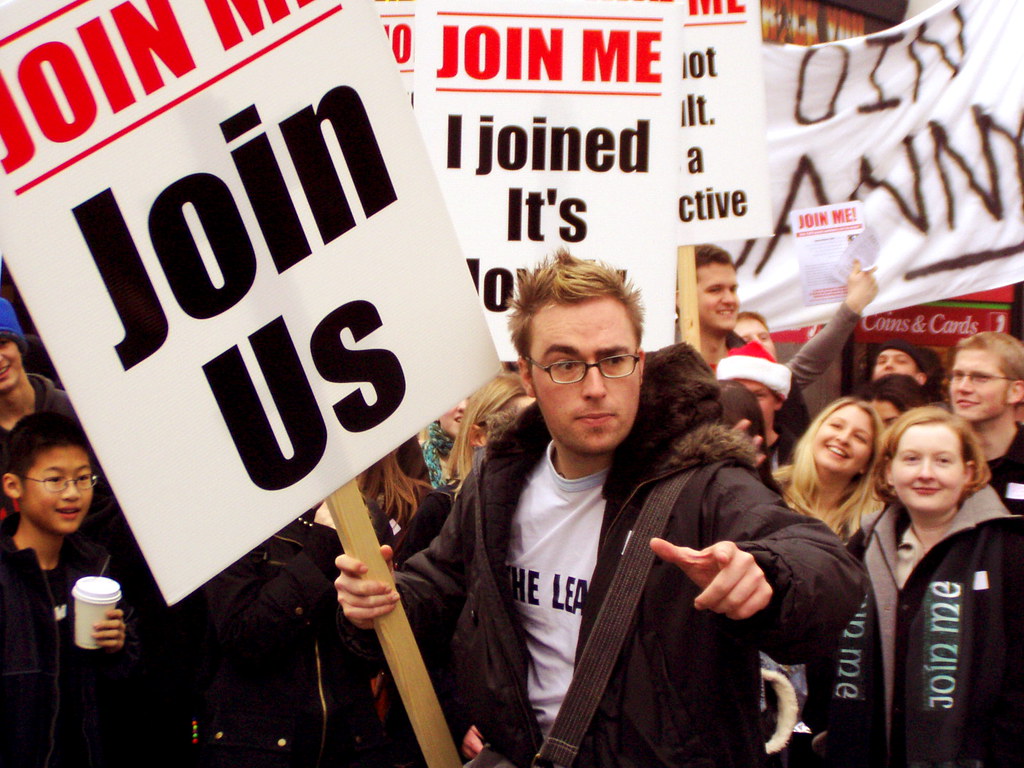
Image via cuddlycomments.com
That's the message you'll find in Chapter 10 - Trust, in my forthcoming book (Palgrave-Macmillan, January 2014) -The 10 Principles of Open Business.

It's the same position arrived at by Google and Brian Solis in their work on The Zero Moment of Truth (ZMOT) and - more recently - Brian's Ultimate Moment of Truth (UMOT).

ZMOT asserts we start our path to purchase in our perception of the expression of experience of others in our social circle. We hear good things. We hear bad things. We act accordingly.

Our own research (at The Social Partners) supports the idea that social media (which can almost wholly be defined as the expression of shared experience by our peers and people like us, as viewed from a variety of individual perspectives ) is THE place we turn to for evidence of performance: Advertising makes the promise, social delivers the truth.

Brian's UMOT is a neat expression of a concept I have been applying to my own work in social media strategy:  Building trust through performance at the level of the one-to-one relationship.

Since the brand is what people say it is, having experienced it, how do we encourage people to express their joy? What we do know is that people don't express their meh! So-so performance, mediocrity, blandness - of these we have nothing to report to our peers through social. The technical barrier remains that little bit too high. We don't tweet 'coffee in Starbucks was, you know, ok '. We do tweet 'awesome service in Starbucks today' or 'Starbucks was super sucky this morning'.

We go to the effort to report the out-of-the-ordinary, not (yet) the ordinary.

Brian's response is to encourage expression (reporting the out-of-the-ordinary) we must engage them - by which he means do something to make them love you (and that is most assuredly NOT clicking the Like button or browsing over your centre-out messaging content).

My own work in relationship marketing suggests similar (indeed the whole concept of Open Business shared in The 10 Principles of Open Business is about taking customer engagement to a whole new level by making partners of customers in everything you do).

Engagement, Brian argues, is about emotion.

Again, agreed. And here's the thing to guard against: Social Media is not good at broadcasting emotion - just as it can't broadcast trust.
Emotion resides in the individual and in their interaction with their peers.  Winding up a John Lewis Christmas TV ad and setting it off among your targets won't do the job.

You have to provide the out-of-the-ordinary. You have to build trust in your performance, You have to build the relationships, one person at a time.

This may sound expensive but we are already finding methodologies to track the effectiveness of this over-
delivery, of how far and for how long the emotional impact of feeling a little bit of love resonates.
My belief - one for which I am busy gathering evidence (and there are many anecdotal examples) is that being 'insanely great', as Steve Jobs put it, pays massive dividends.

At the end of the day since the aggregate output of what other people say is what your brand is, then this is where you should be focusing your  brand budget.

All the rest is just a promise.


Labels: , , , , , , , , , , , , , , , ,

Monday, November 24, 2008

Social Media: It's educational

One of the reasons I love social media is its ability to reveal the power of the network.

That power is there for anyone to discover. But is only truly appreciated by those who participate.

This is a key distinction. There are those who believe they can use social media and those who understand they can participate in it.

The first group, the users, stand back from it. And from afar they order its deployment. These are the people who - no matter how much they may protest - do not really understand it. (Picture courtesy)

This first group see social media as just another channel. They see it as another way to extend reach, to gather eyeballs. They like their measures in the thousands and millions.

They neglect a simple truth. The only measure that really counts is the action that results; a sale, a new believer, a new organisation, a better mousetrap. .

Theirs is the world of never mind the quality, feel the bandwidth.

You'll know you are in group 1 if you blog but don't allow comments, if you broadcast an rss feed into Twitter but follow no one, if you stuff videos on to Youtube but don't respond to comments or video responses. If you spam 'your friends' on Facebook.

Sure, you're using social media. You're not participating in it though.

The second group are those who genuinely benefit from social media. 
They learn as they do.
  • Where group 1 says Use Social Media, we say Participate.
  • Where group 1 asks how many were exposed to a message, we ask what action resulted ( how was a community of purpose galvanized to act?)
  • Where group 1 stands back to witness the power of the network, group 2 is partipating in it.
Like I say, one of the reasons I love social media is for its ability to adapt people, brands and organizations to the networked world.

Those who would only witness are missing out on learning so much.

They aren't taking part in a conversation.

As I've said before, the act of participating raises and answers questions about control and ownership - a process which makes brands and orgs better adapted to the connected world.

This does not happen if you and your people simply stand back and count the beans.

This time, you really do have to be in it to win it.

Labels: , , , , ,

Wednesday, October 1, 2008

Clay Shirky on why email stuffs facebook et al

I interviewed Clay Shirky earlier this week. Here's part two of the series.
(part one: How algorithms caused the credit crunch)
In part two Clay explains why he thinks email is the most effective tool for group-forming (and therefore for influence on social and political change) right now. He describes the impact its 'dull' ubiquity is having on the US Presidential elections.
And we talk about the future of mass any-and-everything (though particularly broadcast TV) with reference to solidarity goods (value gained from shared experiences). Clay reasons that far from dumbing down, the fragmentation of the internet is demanding increasing quality from its hits.
When media and channels were scarce you got a share in the value of solidarity goods simply for showing up. Now you only get a share by being truly excellent.
Watch the video below. Buy his book here. See him speak here.

Labels: , , , , , , , , ,

Thursday, July 24, 2008

Should bands sue record labels over threat to ban fans?


This is such typical centralised, broadcast thinking. Just exactly what do they think they can control?
The record industry has struck a deal with the six major UK ISPs and the Government to 'deal with' people who illegally share music*.

Deluded fools.

So the second mass media (recordings) is trying to exert control over the sixth (the internet) and the eighth (us)? (image by digitalbear)

How do they propose to do this? Well, they'll send us a stern letter (anyone else see the irony in choosing the post as a delivery mechanism rather than an IM or an email?). Er....and then they'll think about what to do next... Right.

There are a few problems here. I don't have enough life to detail them all, but let's describe the biggies.

1. Nobody owns the internet - least of all the six major UK ISPs. They have no control over what is done on it or by whom or how one node or person connects to another. Their only control is to charge admission. They aren't the only ones to supply access. Others will see a competitive advantage in refusing an invite to this Government-hosted record industry party. Beware the backlash big fellas!
2. Haven't the record companies heard of the because effect? Prince has, Radiohead have, NineInchNails have, and recently (free cd on the Mail on Sunday just before the release of a not free CD) David Bowie has. If you can't make money with content, you can because of it (eg google vs yahoo!). Is the Guardian about to send me a letter insisting I cease and desist from linking to its website because of the link I shared at the top of this post? No it expects the attention I have given it to create value (see also point 4!). Get it?

3. This is a slippery slope. If the Government is so keen to encourage complicity with national laws in respect of music downloads, why not on porn? What if it gets a taste for this control lark? Would anyone use the Government-approved internet?

4. *Thou shalt not promote/recommend to your friends (leveraging your own social graph as the perfect distribution method) or otherwise solicit the sales of our product... is not something I would expect the promoters of artists (that's you, record companies) to demand of my fans.

If I was in a band I'd seriously consider sueing!

The internet changes everything. You cannot expect to impose old ideas of business as usual.
As Clay explains (via Alan) below. Buy Clay's book. It's great. Mind you, so is Alan's.

Labels: , , ,